
Here’s the short answer:
- Choose Google if you are a complete beginner looking for an accessible, highly structured introduction, strong global brand recognition, and a proven pathway into entry-level data roles.
- Choose IBM if you want deeper technical skills—specifically with heavy Python data manipulation and SQL—and prefer working on more complex, code-centric project portfolios.
- Program Overview
- Google Data Analytics Professional Certificate
- IBM Data Analyst Professional Certificate
- Head-to-Head Comparison
- Deep Dive: Curriculum & Tools
- 1. Programming & Data Manipulation
- 2. SQL & Spreadsheets
- 3. Data Visualization & Dashboarding
- Employer Recognition & Job Prospects
- Which One Should You Choose?
- Pick Google Data Analytics if:
- Pick IBM Data Analyst if:
- The Verdict
Program Overview
Both programs are hosted on Coursera, require no prior experience, and aim to take career changers from zero to job-ready. However, their teaching philosophies and core tool stacks differ significantly.
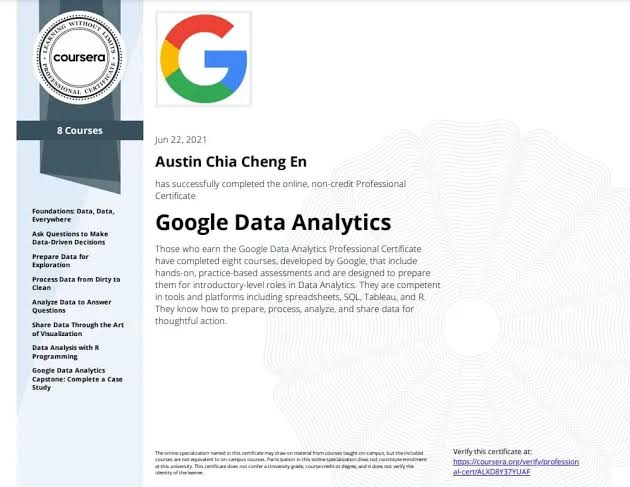
Google Data Analytics Professional Certificate
Google takes a business-oriented, top-down approach. Rather than diving straight into code, Google structures its curriculum around the six stages of the data analysis process: Ask, Prepare, Process, Analyze, Share, and Act.
- Core Focus: Foundations of data-driven decision making, data cleaning, spreadsheeting, and business communication.
- Primary Tools: Spreadsheets (Google Sheets/Excel), SQL (BigQuery), Tableau, and introductory programming.
- Best For: Total beginners who feel intimidated by programming and want a gentle, structured learning curve.
IBM Data Analyst Professional Certificate
IBM takes a developer-adjacent, bottom-up technical approach. It spends less time on soft skills and business frameworks and moves quickly into writing code and working inside cloud environments.
- Core Focus: Technical data manipulation, notebook-based analysis, API integration, and dashboarding.
- Primary Tools: Python (
pandas,NumPy,Matplotlib), SQL (Db2/PostgreSQL), Excel, and IBM Cognos Analytics / Tableau. - Best For: Learners comfortable with technology who want to graduate with strong Python and database skills.
Head-to-Head Comparison
| Feature | Google Data Analytics | IBM Data Analyst |
| Number of Courses | 8 courses | 11 courses |
| Pacing / Time Commitment | ~6 months (10 hrs/week) | ~4–11 months (flexible) |
| Main Programming Tool | Python / R fundamentals | Python (pandas, NumPy, SciPy) |
| Database Focus | SQL via BigQuery | SQL via relational DBs & cloud labs |
| Visualization Focus | Tableau | IBM Cognos Analytics & Tableau |
| Career Support | Google Employer Consortium (150+ companies) | IBM Talent Network & employer partners |
| Cost | ~$49/month Coursera subscription | ~$49/month Coursera subscription |
Deep Dive: Curriculum & Tools
1. Programming & Data Manipulation
- Google: Focuses heavily on conceptual understanding before syntax. You learn data syntax step-by-step with guided notebooks, making it easy to digest if you’ve never written a line of code in your life.
- IBM: Treats Python as a core skill from early on. You will use Jupyter Notebooks to clean messy data, scrape web pages, manipulate dataframes using
pandas, and build data visualizations using libraries likeMatplotlibandSeaborn.
2. SQL & Spreadsheets
- Google: Excellent spreadsheet coverage. It teaches pivot tables, VLOOKUPs, and nested formulas thoroughly. For SQL, it uses Google Cloud BigQuery to teach syntax, filtering, joins, and aggregations.
- IBM: Breezes past spreadsheets quickly to get you into SQL and Python. Its SQL training goes deeper into database architecture, primary/foreign keys, and managing real instances in cloud environments.
3. Data Visualization & Dashboarding
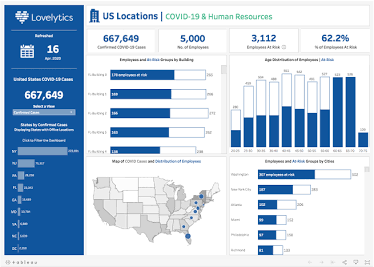
- Google: Pairs directly with Tableau, one of the most widely used business intelligence tools in the industry. You build interactive dashboards and learn how to present data stories to non-technical stakeholders.
- IBM: Teaches both IBM Cognos Analytics and Tableau. While Cognos is used in large enterprise environments, Tableau and Power BI carry higher general job market demand.
Employer Recognition & Job Prospects
Key Difference: Google wins on brand recognition; IBM wins on technical depth.
- The Google Advantage: Google’s certificate is widely recognized by HR screeners and non-technical hiring managers. Graduates get access to the Google Career Certificates Employer Consortium, a network of over 150 top employers (including Deloitte, Target, Ford, and Accenture) that actively consider certificate holders for entry-level roles.
- The IBM Advantage: Technical hiring managers often appreciate IBM portfolio projects more because they showcase direct Python proficiency. If you are applying to tech-heavy firms or data engineering-adjacent analyst roles, IBM’s curriculum aligns closely with daily technical expectations.
Which One Should You Choose?
Pick Google Data Analytics if:
- You have zero technical or coding background and want a smooth, encouraging learning process.
- You want to focus on business intelligence, data storytelling, spreadsheets, and Tableau.
- You want access to the 150+ employer hiring consortium.
Pick IBM Data Analyst if:
- You want to build strong Python coding skills (
pandas,NumPy, web scraping) right out of the gate. - You learn best by building hands-on technical projects inside cloud lab environments.
- You are targeting roles at tech companies that emphasize Python and SQL mastery over basic spreadsheet analysis.
The Verdict
For most absolute beginners, Google Data Analytics remains the safer starting point. Its lower barrier to entry, focus on business value, and strong employer partner program give career changers the confidence and resume backing they need.
If you finish Google and want to level up your programming, or if you already feel comfortable with basic math and logic, IBM Data Analyst is the superior technical upgrade.