Tattooing has evolved from a niche artistic practice into one of the fastest-growing creative industries in the world. Today, tattoo artists build personal brands, collaborate with fashion labels, create custom artwork for clients, and earn income through both studio work and independent commissions. However, learning tattooing through random online videos often creates gaps in knowledge, technique, hygiene, and design fundamentals. A structured learning path is essential for anyone who wants to develop professional skills with confidence.
Introduction to Tattooing is a beginner-friendly course designed for aspiring tattoo artists who want to understand the complete creative and technical process behind professional tattoo work. Rather than jumping directly into tattoo machines, the course begins with drawing fundamentals, design planning, and safe working practices. This creates a strong foundation that helps beginners avoid common mistakes and develop better artistic habits from day one.
Whether your goal is to become a freelance tattoo artist, expand your illustration skills, or simply explore tattoo art as a creative hobby, this course offers a clear roadmap guided by an experienced professional. By the end of the journey, you will have created your own tattoo design and understand the complete workflow behind bringing artwork to skin.
Why Structured Tattoo Education Matters
Many beginners start tattooing after watching short tutorials on social media. While those videos may demonstrate individual techniques, they rarely explain why certain methods work or how professional artists prepare designs safely and consistently.
This course replaces scattered learning with a complete educational experience. Every lesson builds upon the previous one, helping students understand artistic concepts before moving into practical application. Instead of memorizing isolated tricks, learners develop a repeatable creative process that can be used for future tattoo projects.
| Structured Course Learning | Random Internet Tutorials |
|---|---|
| Step-by-step learning path. | Disconnected lessons with no progression. |
| Professional guidance from an experienced tattoo artist. | Mixed advice from creators with different standards. |
| Focus on hygiene, safety, and preparation. | Safety information is often incomplete. |
| Build one complete tattoo project. | Practice without a finished portfolio piece. |
| Downloadable resources for continued practice. | Resources are inconsistent or unavailable. |
What You Will Learn Throughout the Course
The course begins by introducing the creative mindset behind tattooing. Students explore how tattoo art differs from traditional illustration and why designing for skin requires different thinking than designing for paper or digital screens.
Next, you learn how to gather inspiration responsibly and transform references into original tattoo concepts. Instead of copying existing tattoos, the course encourages developing unique compositions that reflect your artistic identity.
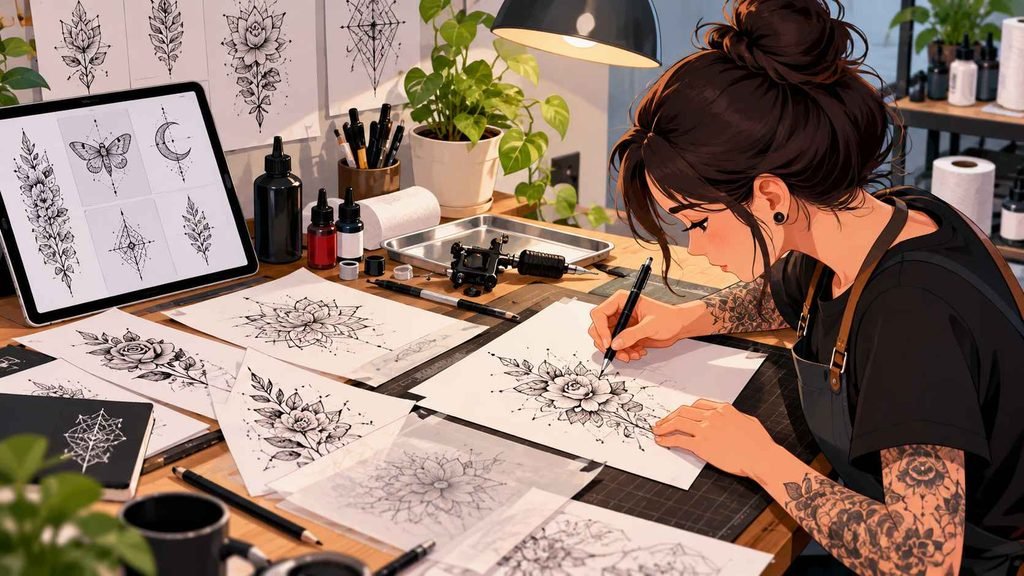
Another major section focuses on sketching. You practice creating clean outlines, balancing shapes, simplifying details, and improving readability. These skills help produce tattoo designs that remain visually strong over time.
The curriculum also explains the essential tools used by tattoo artists. You become familiar with tattoo machines, needles, inks, transfer paper, and other studio equipment while learning the purpose of each tool within the tattooing process.
Hygiene and preparation receive significant attention because safety is a fundamental part of professional tattooing. Students learn workspace preparation, sterile practices, skin preparation, and the importance of maintaining clean equipment throughout every session.
As the lessons progress, you discover how to transfer artwork onto practice surfaces and understand the basic workflow before tattooing begins. This preparation reduces errors and creates more accurate final results.
The course concludes with the creation of a complete tattoo illustration that combines drawing, composition, preparation, and technical planning into one finished project suitable for a beginner portfolio.
Skills That Extend Beyond Tattooing
One of the biggest strengths of this course is that it teaches transferable creative skills. Even if you decide not to pursue tattooing professionally, the lessons improve illustration quality, line work precision, composition, and visual storytelling.
- Drawing clean and confident line art.
- Creating balanced visual compositions.
- Developing original artistic concepts.
- Understanding creative workflows from sketch to final design.
- Building consistency through structured practice.
These skills are valuable for illustrators, graphic designers, digital artists, and anyone interested in creating custom artwork for clients.
Building a Portfolio Project
Instead of ending with theory, the course guides students through creating a complete tattoo design that demonstrates everything learned during the lessons. This capstone project becomes a valuable portfolio asset that showcases creative thinking and technical preparation.
Your finished design can be presented in a portfolio, shared on social media, included on a personal website, or used to begin conversations with potential clients and studios. Portfolio-focused learning makes the course much more practical than simply watching demonstrations.
As you continue practicing, you can repeat the same workflow to build an entire collection of tattoo concepts in different styles, helping establish your artistic signature over time.
Career Benefits of Learning Tattooing
Tattooing offers creative professionals multiple income opportunities beyond working in a traditional tattoo studio. Artists can accept commissioned tattoo designs, collaborate with brands, sell flash tattoo collections, teach workshops, or expand into illustration and merchandise.
Learning a professional workflow also improves productivity. Instead of spending hours correcting design mistakes, you develop a structured approach that saves time during sketching, refinement, and preparation. This allows you to complete projects more efficiently while maintaining consistent quality.
For freelancers, stronger workflows often translate into better client communication and more polished deliverables. Clear design preparation builds confidence and helps clients understand the creative process before tattooing begins.
Because the course is self-paced, students can practice around work, college, or freelance schedules. Lessons remain available for review whenever additional practice is needed, making it easier to revisit techniques while developing new projects.
Who Should Take This Course?
This course is ideal for beginners with little or no tattooing experience. It is equally useful for illustrators who want to adapt their artwork for tattoos and creative hobbyists interested in exploring body art through professional guidance.
- Complete beginners exploring tattoo art.
- Illustrators expanding into tattoo design.
- Creative freelancers adding a new skill.
- Artists building a portfolio for tattoo studios.
- Hobbyists learning professional tattoo fundamentals.
Final Thoughts
Creative careers grow through consistent practice, structured education, and strong portfolio work. Tattooing combines artistic expression with technical precision, making it one of the most rewarding creative disciplines for dedicated learners. Building a solid foundation early helps reduce mistakes and creates confidence for future projects.
Introduction to Tattooing provides a practical roadmap from basic drawing principles to creating a finished tattoo design while emphasizing preparation, hygiene, composition, and artistic development. Instead of relying on scattered tutorials, students learn a repeatable workflow that supports long-term creative growth.
If you want to transform your illustration skills into tattoo-ready artwork, build a beginner portfolio, and learn directly from an experienced tattoo artist at your own pace, this course is a valuable first step toward developing professional creative skills.