
Getting freelance design clients is not only about having a polished portfolio. Many successful freelancers attract work because they regularly share how they think, solve problems, and create their designs. This approach is often called content marketing or building in public—creating useful content that shows your process instead of only your finished work.
For freelance designers, this strategy helps potential clients understand your skills, creativity, and professionalism before they ever contact you. Instead of constantly searching for new projects, thoughtful content can bring interested clients directly to you.
What Is Content Marketing for Freelance Designers?
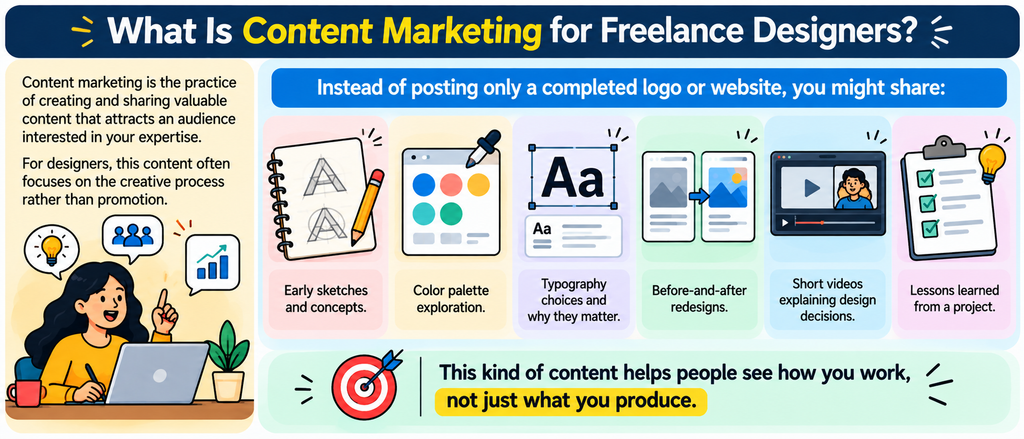
Content marketing is the practice of creating and sharing valuable content that attracts an audience interested in your expertise. For designers, this content often focuses on the creative process rather than promotion.
Instead of posting only a completed logo or website, you might share:
- Early sketches and concepts.
- Color palette exploration.
- Typography choices and why they matter.
- Before-and-after redesigns.
- Short videos explaining design decisions.
- Lessons learned from a project.
This kind of content helps people see how you work, not just what you produce.
Why Sharing Your Process Attracts Clients
Clients usually hire designers because they trust their thinking as much as their visual style. Showing your process builds that trust.
It demonstrates expertise
When you explain why you chose a layout, font, or visual hierarchy, you show problem-solving skills. Clients begin to understand that design decisions have purpose, not just aesthetics.
It builds familiarity
People who regularly see your posts become familiar with your work over time. When they need a designer, you’re already on their radar.
It answers client questions in advance
Content can explain topics clients often wonder about, such as:
- Why good branding takes time.
- What information designers need before starting.
- The difference between a logo and a complete brand identity.
- How revisions work.
This reduces confusion and makes conversations smoother.
What “Building in Public” Looks Like for Designers
Building in public means documenting parts of your creative journey while you’re working or learning. It does not mean revealing confidential client information.
Examples include:
| Content idea | What it shows |
|---|---|
| Sketch-to-final carousel | Creative development and iteration. |
| Time-lapse screen recording | Workflow inside your design software. |
| Design breakdown post | Reasoning behind colors, spacing, or typography. |
| Behind-the-scenes workspace | Professional habits and organization. |
| Case study | How you solved a client’s design challenge. |
The goal is to make your creative thinking visible.
Types of Content That Work Well
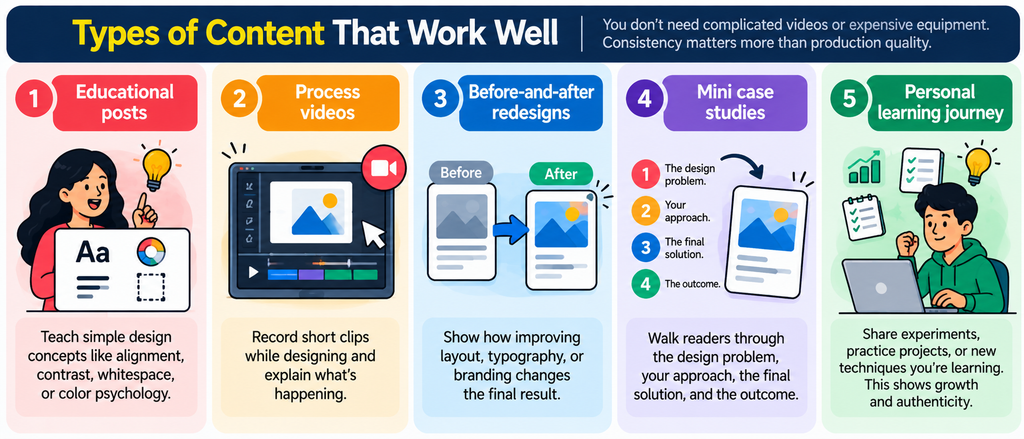
You don’t need complicated videos or expensive equipment. Consistency matters more than production quality.
Educational posts
Teach simple design concepts like alignment, contrast, whitespace, or color psychology.
Process videos
Record short clips while designing and explain what’s happening.
Before-and-after redesigns
Show how improving layout, typography, or branding changes the final result.
Mini case studies
Walk readers through:
- The design problem.
- Your approach.
- The final solution.
- The outcome.
Personal learning journey
Share experiments, practice projects, or new techniques you’re learning. This shows growth and authenticity.
Where Should Freelancers Share Their Content?
Different platforms serve different purposes.
| Platform | Best use |
|---|---|
| Carousels, reels, design tips, behind-the-scenes. | |
| Case studies, branding insights, professional storytelling. | |
| Behance | Detailed portfolio projects and creative process documentation. |
| Dribbble | Visual work-in-progress and design shots. |
| Personal blog | Long-form tutorials and SEO-friendly articles. |
| YouTube | Process walkthroughs, tutorials, and design commentary. |
You don’t have to use every platform. Choosing one or two and posting consistently is often enough.
How to Turn One Design Project Into Multiple Content Pieces
A single client project can become several pieces of content without repeating the same message.
For example, a branding project could produce:
- A mood board carousel.
- A reel showing sketching and digital refinement.
- A typography explanation post.
- A color palette story.
- A complete case study on your website.
- A LinkedIn post describing the business challenge.
This helps you create content efficiently while showcasing different aspects of your expertise.
Writing About Your Design Decisions
Many designers worry they are “not good writers.” You don’t need long essays.
A simple structure works well:
- The challenge: What problem were you solving?
- Your thinking: Why did you choose this direction?
- The solution: What changed in the final design?
- The takeaway: What did you learn or what should clients know?
This keeps posts educational and easy to read.
Building Trust Without Revealing Client Secrets
Respecting client confidentiality is important.
Safe content includes:
- Publicly launched projects.
- Personal projects.
- Design challenges.
- Practice exercises.
- General workflow demonstrations.
Avoid sharing private client files, confidential feedback, unreleased branding, or sensitive business information without permission.
Common Mistakes Designers Make With Content Marketing
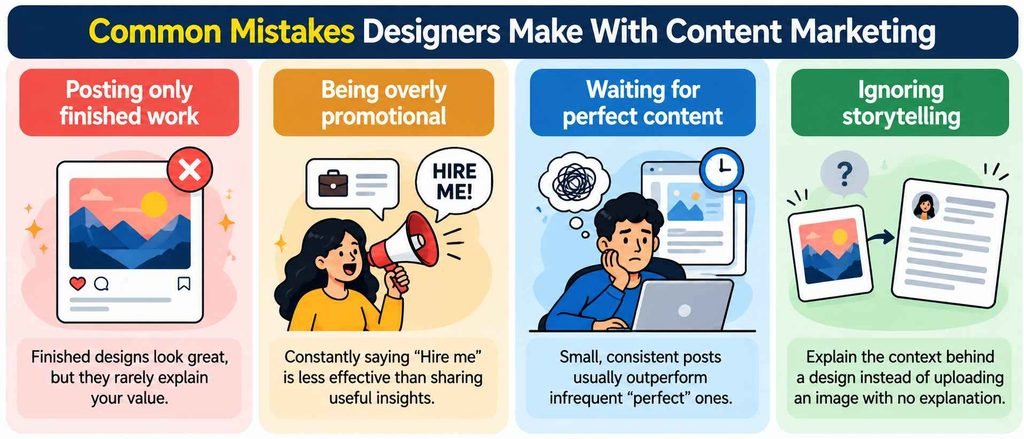
Posting only finished work
Finished designs look great, but they rarely explain your value.
Being overly promotional
Constantly saying “Hire me” is less effective than sharing useful insights.
Waiting for perfect content
Small, consistent posts usually outperform infrequent “perfect” ones.
Ignoring storytelling
Explain the context behind a design instead of uploading an image with no explanation.
How Consistency Leads to Inbound Clients
Inbound clients are people who contact you because they already know your work. They may discover you through social media, search engines, referrals, or shared content.
Content contributes to this by:
- Increasing visibility.
- Demonstrating expertise.
- Building credibility.
- Giving people something valuable to share.
- Creating long-term discoverability through search and social platforms.
Instead of pitching every client, your content becomes part of your marketing system.
Simple Weekly Content Plan for Freelance Designers
A manageable schedule can keep content creation sustainable.
| Day | Content idea |
|---|---|
| Monday | Design tip or educational carousel. |
| Wednesday | Behind-the-scenes process reel. |
| Friday | Case study or project breakdown. |
| Weekend | Personal learning, inspiration, or Q&A. |
This creates variety without requiring daily posting.
Tools That Can Help Create Design Content
Depending on your workflow, useful tools may include:
- Figma for interface and branding design.
- Adobe Illustrator for logos and vector graphics.
- Adobe Photoshop for image editing and mockups.
- Canva for quick social media graphics.
- CapCut or Premiere Pro for editing short videos.
- Screen recording software for workflow demonstrations.
The best tool is the one that fits your existing design process.
Who Can Benefit From This Approach?
Content marketing is especially useful for:
- Graphic designers.
- Brand identity designers.
- UI/UX designers.
- Web designers.
- Motion designers.
- Illustrators.
- Product designers.
- Design students building a freelance portfolio.
It can also help experienced freelancers strengthen their personal brand and attract more aligned clients.
What You Can Expect From Building in Public
Sharing your design process does not guarantee immediate freelance work, but it creates opportunities for people to discover and understand your expertise over time. Instead of relying only on portfolio updates or outreach, content becomes a way to demonstrate your creative thinking, communicate your workflow, and build trust with potential clients.
For freelance designers, building in public is less about showing every step of a project and more about making the value behind the work visible. When people understand how you solve design problems, they gain a clearer picture of what it would be like to work with you—and that is often what turns casual followers into future clients.
2 thoughts on “Why Sharing Your Design Process Is the Freelance Marketing Strategy More Designers Should Use”